As a parent, you probably pay close attention to your child’s health, development, school performance and overall well-being. Vision is an important part of all of these areas, yet eye health can sometimes be overlooked simply because children do not always know when something is wrong with their vision.
A child may not complain about blurry vision because they may assume that the way they see is normal. Some vision problems can also develop without obvious symptoms. This is why regular comprehensive eye exams are an important part of childhood health care.
For families in Oakville, scheduling regular children’s eye exams with an optometrist can help identify vision concerns early and ensure your child has the visual skills they need for learning, play, and everyday activities.
How Does Vision Affect a Child’s Development?
Children rely heavily on their vision as they learn about the world around them. Reading, writing, drawing, using classroom materials, playing sports and interacting with others all require the eyes and brain to work together effectively.
The Canadian Association of Optometrists notes that school-aged children use a range of visual skills throughout the day, including focusing, eye movement, and eye coordination. If one of these skills is not developing properly, a child may need to work harder during schoolwork or other close-up activities.
A vision problem does not necessarily mean that a child will have noticeably blurry vision. A child may have difficulty with focusing, tracking a line of text, using both eyes together, or maintaining comfortable vision during close work.
Over time, these challenges may contribute to headaches, eye fatigue, difficulty concentrating or reluctance to read.
Why Children May Not Tell You They Have a Vision Problem
Adults generally know when their vision has changed because they can compare their current vision with what they previously experienced. Young children do not always have that same point of comparison.
If a child has always seen the classroom board unclearly, for example, they may not realize that other children see it differently.
This is one reason parents should not wait for their child to complain before arranging an eye exam. The Canadian Association of Optometrists recommends a first comprehensive eye examination during infancy, another examination during the preschool years and regular examinations throughout the school years.
Signs Your Child May Need an Eye Exam
Although some vision problems have no obvious symptoms, there are certain behaviours parents can watch for.
Consider scheduling an eye examination if your child frequently:
- Squints when looking at objects in the distance or up close
- Rubs or covers their eyes
- Holds books, tablets or other objects very close to their face
- Complains of headaches, particularly after reading or schoolwork
- Avoids reading, writing or other close-up activities
- Loses their place while reading
- Tilts their head or closes one eye when looking at something
- Has difficulty concentrating during visually demanding tasks
- Complains that their vision is blurry or that they see double
- Has an eye that consistently turns in or out
These signs do not necessarily mean your child has an eye condition. However, they can be a good reason to arrange a comprehensive assessment with an optometrist.
What Is Checked During a Children’s Eye Exam?
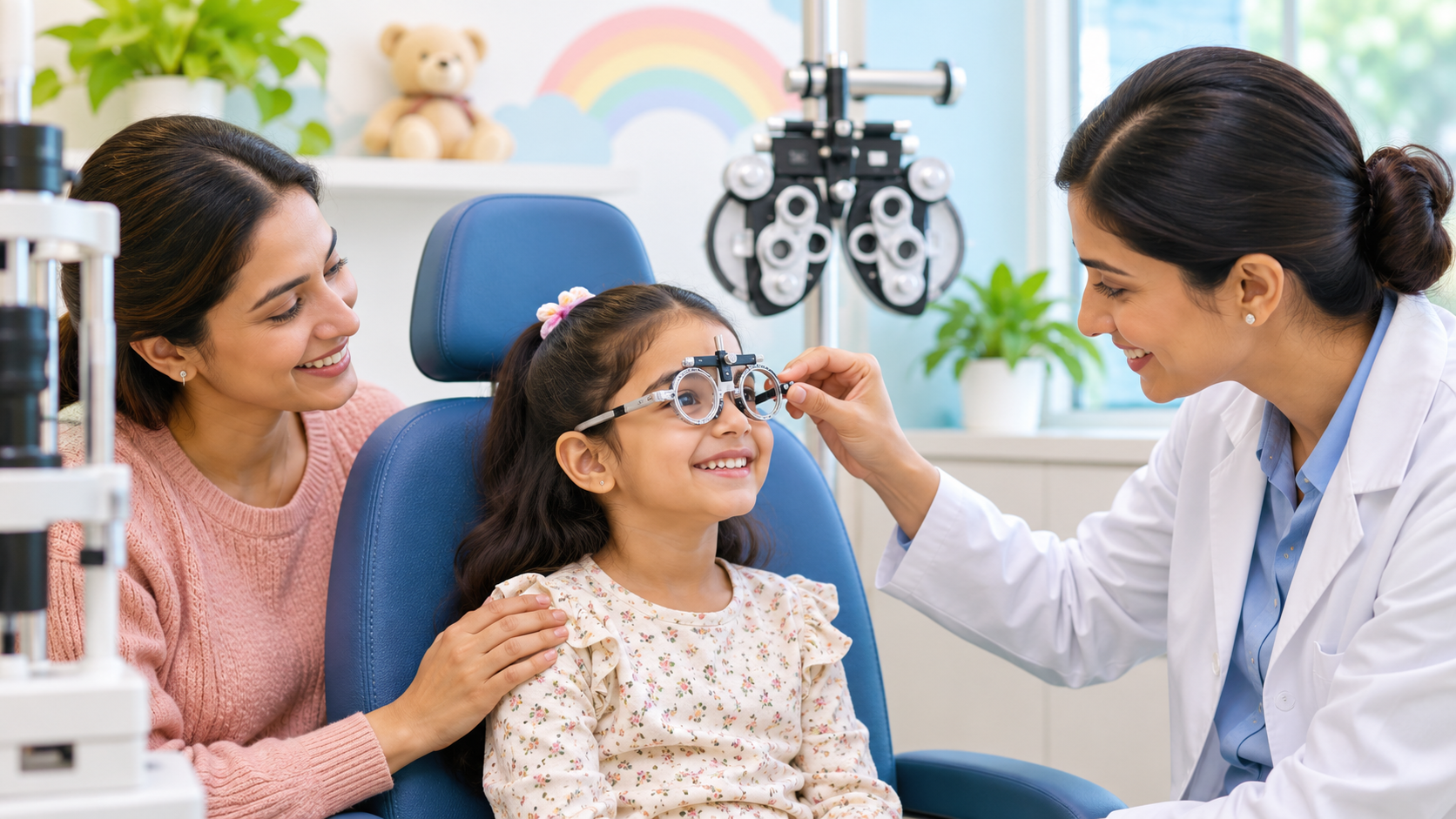
A children’s eye exam involves more than simply asking a child to read letters from an eye chart.
The examination is adapted to the child’s age and ability. At InVision Eye Clinic, children can be assessed using age-appropriate testing, including assessments of visual acuity, eye alignment, focusing ability, binocular vision, colour vision and depth perception.
The optometrist also evaluates overall eye health. In some cases, advanced diagnostic technology such as retinal imaging and Optical Coherence Tomography (OCT) may be used to provide additional information about the health of the retina, optic nerve and other structures inside the eye.
Importantly, young children do not necessarily need to know their letters or be able to read to have an eye examination. Many aspects of the assessment can be performed using child-friendly techniques appropriate for their age and developmental stage.
When Should a Child Have an Eye Exam?
According to the Canadian Association of Optometrists, recommended examination schedules for children include:
- Infants and toddlers: A first comprehensive eye exam between 6 and 9 months of age.
- Preschool children: At least one eye examination between 2 and 5 years of age.
- School-aged children: Comprehensive eye examinations annually from ages 6 to 19.
Your optometrist may recommend a different schedule depending on your child’s vision, eye health, family history and individual risk factors.
If your child has already been diagnosed with a vision condition or has a rapidly changing prescription, more frequent monitoring may also be appropriate.
What About Myopia in Children?
Myopia, commonly known as near-sightedness, is becoming an increasingly important consideration for children’s eye health.
A child with myopia may see nearby objects clearly but have difficulty seeing objects at a distance. Parents may notice behaviours such as squinting, sitting close to the television or holding objects closer to the face.
Early detection is important because myopia can progress as a child grows. Regular eye examinations allow an optometrist to monitor changes in vision and discuss appropriate management options when necessary.
At InVision Eye Clinic, myopia control for children is part of the clinic’s approach to paediatric eye care. Depending on the child’s individual needs, an optometrist can discuss strategies intended to slow the progression of myopia and monitor changes over time.
Are School Vision Screenings Enough?
School or community vision screenings can be useful for identifying certain concerns, but they are not a replacement for a comprehensive eye examination.
A comprehensive examination looks at several aspects of vision and eye health, including focusing, eye movement, eye coordination and the health of the eyes. A child may have 20/20 visual acuity and still experience difficulties with other visual skills.
For this reason, parents should continue to follow recommended eye examination schedules even if their child appears to see well or has passed a vision screening.
How Can Parents Make an Eye Exam Easier for Their Child?
For some children, visiting an optometrist for the first time can feel unfamiliar. A little preparation can make the experience more comfortable.
Before the appointment, explain that the optometrist will be checking how well their eyes work and that there are no right or wrong answers during the tests. For younger children, keeping the explanation simple and positive can help reduce anxiety.
It can also be helpful to bring your child’s glasses, if they wear them, along with information about any previous eye examinations or concerns you have noticed.
A child-friendly approach is particularly important because the examination should be adapted to the child’s age, maturity and ability to understand what is happening.
Supporting Healthy Vision Between Eye Exams
Regular eye examinations are only one part of supporting your child’s vision.
Parents can also encourage healthy visual habits at home. For children who spend significant time reading or using digital devices, regular breaks from close-up activities can help reduce visual fatigue. Outdoor time is also encouraged as part of healthy childhood routines, and Canadian optometry guidance notes that spending time outdoors may help protect against the development of myopia.
Most importantly, pay attention to changes in your child’s behaviour. A sudden reluctance to read, frequent headaches, squinting or difficulty seeing the board may be worth discussing with an optometrist.
Children’s Eye Exams in Oakville
Your child’s vision can influence how they learn, play and interact with the world around them. Because children do not always recognize or report changes in their vision, regular comprehensive eye examinations can help identify concerns before they interfere with everyday activities.
At InVision Eye Clinic in Oakville, children’s eye exams are designed around the child’s age and developmental stage. The clinic provides child-friendly vision testing, comprehensive eye health assessments and personalized recommendations for children from infancy through the teenage years. Myopia management is also available for children who need additional support as their prescription changes.
If your child is due for an eye examination, or you have noticed changes in their vision, reading habits or behaviour, consider booking a children’s eye exam in Oakville with an optometrist.
Frequently Asked Questions
How often should my child have an eye exam?
For school-aged children, the Canadian Association of Optometrists recommends a comprehensive eye examination every year. Younger children should also have examinations according to age-based recommendations, beginning in infancy. Your optometrist may recommend more frequent visits when needed.
Can a child have a vision problem without knowing it?
Yes. Children may not recognize that their vision is different from other people’s vision. Some vision problems can also occur without obvious symptoms, which is why routine examinations are important.
Does my child need to know how to read before an eye exam?
No. Children’s eye examinations can be adapted to a child’s age and developmental level. Many tests do not require a child to read letters.
Does my child need glasses if they have a vision problem?
Not necessarily. The appropriate recommendation depends on the type and severity of the vision concern and the child’s individual needs. Your optometrist can explain whether glasses, monitoring or another form of treatment is appropriate.
What is myopia control?
Myopia control refers to strategies designed to slow the progression of nearsightedness in children. If your child’s prescription is changing, an optometrist can assess their eyes and discuss whether myopia management may be appropriate.
Where can I book a children’s eye exam in Oakville?
InVision Eye Clinic provides comprehensive children’s eye exams in Oakville for infants, toddlers, school-aged children and teens. The clinic is located at 511 Maple Grove Drive in Oakville, Ontario.

At Invision Eye Clinic, we believe everyone deserves clear, comfortable vision. Our team of experienced optometrists is dedicated to providing personalized eye care using state-of-the-art technology and a patient-first approach.