
Dry Eye Treatment in Oakville
Advanced Diagnosis. Personalized Treatment. Lasting Relief.
What Is Dry Eye Disease?
Dry eye disease occurs when your eyes either do not produce enough tears or the tears evaporate too quickly.
According to the Canadian Dry Eye Assessment and Management Study (CANDEES), approximately one in three Canadians experiences symptoms of dry eye disease, making it one of the most common conditions seen in optometric practice.
Healthy tears are essential for:
- Clear vision
- Ocular comfort
- Protection against infection
- Maintaining a healthy ocular surface
Without a stable tear film, inflammation develops and symptoms often worsen over time.
Common Symptoms of Dry Eye
You may experience:
- Burning or stinging
- Grittiness or a sandy sensation
- Excessive watering
- Redness
- Fluctuating or blurred vision
- Eye fatigue
- Light sensitivity
- Difficulty wearing contact lenses
Although watery eyes seem contradictory, excessive tearing is actually a common response to ocular surface irritation.
What Causes Dry Eye?
The most common cause is Meibomian Gland Dysfunction (MGD), where the oil-producing glands within the eyelids become blocked or unhealthy. Without sufficient oil, tears evaporate rapidly, leaving the eyes dry and inflamed.
Other contributing factors include:
- Aging
- Hormonal changes
- Extended screen time
- Contact lens wear
- Certain medications
- Autoimmune diseases
- Previous eye surgery
- Environmental conditions
Identifying the underlying cause is the key to successful long-term treatment.
Advanced Dry Eye Evaluation
Successful treatment begins with an accurate diagnosis.
At Invision Eye Clinic, every dry eye assessment is designed to evaluate not only your symptoms but the underlying health of your tear film, eyelids, and meibomian glands.
Your assessment may include:
Advanced Dry Eye Analysis
Using our advanced dry eye analyzer, we evaluate tear film stability, ocular surface health, and meibomian gland function with exceptional detail. High-resolution meibography allows us to visualize the oil-producing glands inside the eyelids, helping identify early gland damage before symptoms become severe.
Tear Film Assessment
We evaluate both the quantity and quality of your tears to better understand why symptoms are occurring.
Meibomian Gland Evaluation
Healthy oil glands are essential for preventing tear evaporation. Assessing gland structure and function helps guide targeted treatment recommendations.
Personalized Dry Eye Treatment
No two patients experience dry eye in exactly the same way.
Treatment is tailored to your symptoms, examination findings, and the underlying cause of your condition.
Depending on your needs, treatment may include:
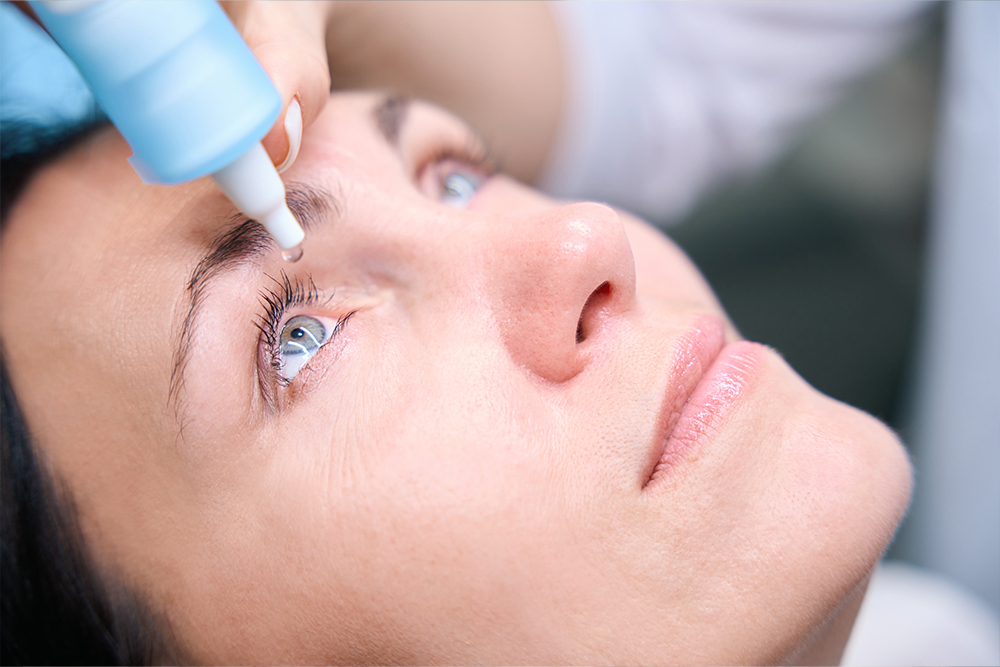
Prescription Eye Drops – Medications designed to reduce inflammation, improve tear production, and stabilize the ocular surface.
Artificial Tears – Lubricating drops that supplement your natural tears and improve comfort.
Warm Compress Therapy – Gentle heat helps restore normal meibomian gland function and improves tear quality.
Lid Hygiene – Professional and at-home eyelid care reduces inflammation and supports healthy gland function.
Nutritional Therapy – Omega-3 supplementation may help improve tear film stability and support healthier meibomian gland function in appropriate patients.
Lifestyle Recommendations – Small changes—including improved screen habits, increased humidity, hydration, and blink exercises—can significantly improve symptoms.
Advanced Dry Eye Therapies – For patients with moderate to severe meibomian gland dysfunction, we offer advanced in-office treatments including Radiofrequency (RF) therapy to improve gland function, reduce inflammation, and provide longer-lasting relief.
Why Early Treatment Matters
Dry eye disease is usually progressive.
Without appropriate treatment, chronic inflammation may damage the ocular surface, reduce visual quality, and make treatment more difficult over time.
Early diagnosis allows us to preserve healthy gland function and develop effective long-term management strategies before permanent gland loss occurs.
Are You at Risk?
You may have an increased risk of dry eye if you:
- Spend several hours each day using digital devices
- Wear contact lenses
- Are over age 40
- Have hormonal changes
- Take medications that affect tear production
- Have autoimmune disease
- Have had previous eye surgery
- Work in air-conditioned or dry environments
Even mild symptoms deserve evaluation because early intervention often produces the best outcomes.
Why Choose Invision Eye Clinic?
Dry eye treatment is about much more than artificial tears.
At Invision Eye Clinic, we combine advanced diagnostic technology, detailed dry eye analysis, and evidence-based treatment to address the root cause of your symptoms.
Patients choose us because we provide:
- Advanced dry eye imaging and meibography
- Personalized treatment plans
- Radiofrequency therapy
- Long-term dry eye management
- Comprehensive ocular surface assessment with repeated scans to monitor progress
- Modern diagnostic technology
Our goal is to restore comfort, improve visual quality, and preserve the long-term health of your eyes.
Schedule Your Dry Eye Consultation
If dry, burning, watery, or irritated eyes are affecting your daily life, effective treatment is available.
Book a comprehensive dry eye evaluation today and discover a personalized treatment plan designed to provide lasting relief.
Frequently Asked Questions
Can dry eye disease be cured?
Why do my eyes water if they are dry?
Meibography is a specialized imaging technique that visualizes the meibomian glands inside the eyelids. It helps diagnose Meibomian Gland Dysfunction and guides personalized treatment recommendations.
What is meibography?
Is screen time making my dry eyes worse?
Yes. Digital device use reduces blink frequency, allowing tears to evaporate more quickly and worsening dry eye symptoms.
Does RF therapy really help dry eye?
Patient Reviews
What Our Patients Say
EXCELLENT Based on 88 reviews
 Posted on Google
 balraj maviGreat selection of frames especially Lindberg glasses. Excellent customer service and treatment. Highly recommendedPosted on Google
 Carolyn ArthurI had a great experience with Dr. Gill! He was incredibly friendly, efficient, and took the time to clearly explain everything during my appointment. I felt well cared for and informed every step of the way. The staff were absolutely outstanding, truly 5+ stars for their professionalism, warmth, and organization. The whole visit was smooth from start to finish. Highly recommend Dr. Gill and the entire team!Posted on Google
 Micheal BrattIm in Oakville for work and one of the screws holding an arm on my glasses came out and vanished at work. A phone call and super quick vist later and I was on my way able to see again ^^ Thank you Lorie for your understanding and help!!Posted on Google
 Hale WashDr. Mandip Gill was an excellent doctor l, he was extremely helpful. I don’t think there is anywhere else I would go to get my eyes checked than this clinic. The staff was great and very helpful. Overall a 10/10 experience.Posted on Google
 M PaskStopped in as I broke a pair of sunglasses right before a trip. They were so kind and helped me fix them! Thanks for your help :)Posted on Google
 Haven SDr. Simran Gill was incredibly thorough and took her time to properly assess my needs for glasses, which I really appreciated. She explained everything in clear, easy-to-understand terms. She also provided very specific, practical next steps for managing my dry eyes. The clinic staff and eyeglasses sales team are also amazing. Highly recommend!Posted on Google
 Meetu SanghaAmazing staff and Dr Mandip Gill is an awesome gem. Jackie was super patient and nice with me. She was courteous and wonderful and kind .Posted on Google
 Marysia GonzalezI went in for a minor repair on my glasses and was assisted professionally and at no charge! Thank you so much. I will be back!Posted on Google
 Anupam RawlaDr. Gill was very kind and super prompt as I had an eye emergency (looked to be a risk) on the weekend and he took time to come in on a Sunday to examine things and give me a full diagnosis / analysis. This is amazing service! Thank you, truly appreciate this level of service!