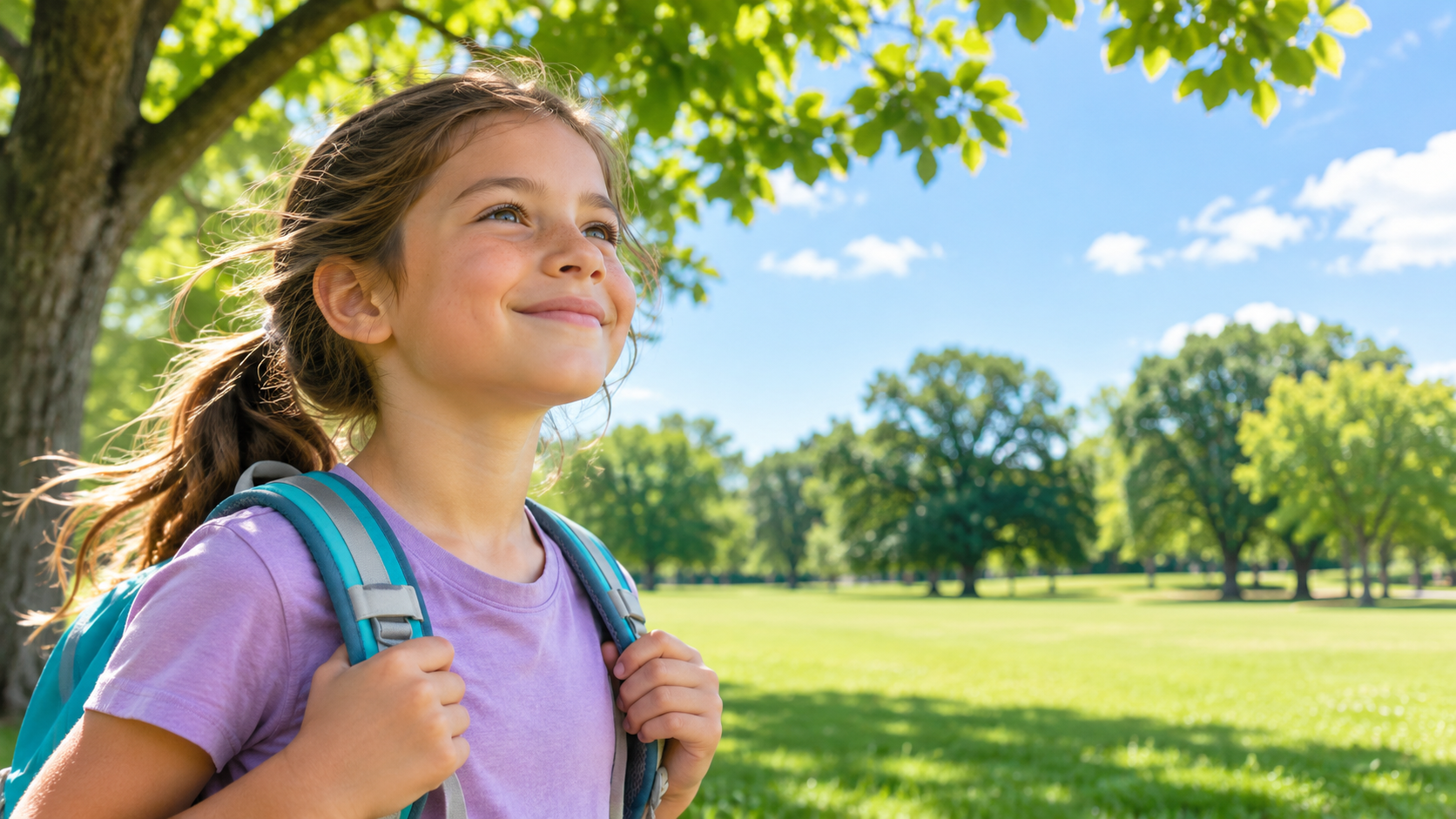
For many children, a typical day includes school, homework, reading, video games, tablets and other screen-based activities. While these activities are a normal part of childhood, it is also important to make time for children to look up, move around and spend time outdoors.
Outdoor play is beneficial for children in many ways, from supporting physical activity to encouraging healthy development. It may also play an important role in eye health.
Research has found an association between spending more time outdoors and a lower risk of developing myopia (nearsightedness) in children. The Canadian Association of Optometrists recommends encouraging children to spend time outdoors as part of healthy vision habits.
So, what is the connection between outdoor time and children’s vision, and what can parents do to encourage healthier habits?
What Is Myopia?
Myopia, commonly known as nearsightedness, is a common vision condition in which nearby objects can be seen clearly, while objects farther away may appear blurry.
For a child with myopia, everyday activities such as seeing the classroom board, recognizing a face across the playground or reading signs from a distance may become more difficult.
One of the challenges with childhood myopia is that children may not always recognize that their vision is blurry. If they have always seen the world this way, they may assume that everyone sees it the same way.
This is why routine eye examinations are important. A comprehensive eye exam can detect myopia and other vision concerns, even when a child does not complain about their eyesight.
How Could Outdoor Time Help Children’s Eyes?
Researchers have been studying the relationship between outdoor time and childhood myopia for many years.
Evidence suggests that spending more time outdoors, particularly in daylight, may help reduce the likelihood of developing myopia. Several reviews and clinical studies have found that children who spend more time outdoors tend to have a lower risk of developing myopia.
The exact reason for this relationship is still being studied. Researchers believe that exposure to brighter outdoor light may play a role in how the eye develops during childhood.
Outdoor activities also naturally give children opportunities to look at objects at different distances rather than spending prolonged periods focused on nearby screens, books or other close-up tasks.
However, outdoor time should be viewed as one part of a broader approach to children’s eye health, rather than a treatment or guarantee against myopia.
Is Outdoor Time a Treatment for Myopia?
No.
If a child already has myopia, simply spending more time outdoors should not be considered a replacement for professional eye care or myopia management.
Research is strongest for the potential role of outdoor time in reducing the risk of myopia developing in children who do not yet have it. Evidence about whether additional outdoor time can significantly slow the progression of myopia in children who are already myopic is less consistent.
If your child’s prescription is changing, an optometrist can assess their vision and discuss appropriate options for monitoring or managing myopia.
How Much Outdoor Time Should Children Get?
There is no single amount of outdoor time that can guarantee healthy vision. However, the Canadian Association of Optometrists encourages children to spend at least one hour outdoors each day, with more being better when practical.
The goal does not have to be complicated.
Outdoor time can include:
- Playing at the park
- Riding a bicycle or scooter
- Walking with the family
- Playing sports
- Exploring a local trail
- Spending time in the backyard
- Playing with friends outdoors
- Gardening or helping with outdoor activities
- Simply spending time outside between indoor activities
The important thing is to make outdoor activity a regular part of your child’s routine.
Outdoor Play Can Also Encourage Breaks From Screens
Children today may spend considerable time using phones, tablets, computers, televisions and gaming devices. Digital devices themselves are not necessarily harmful to children’s eyes when used appropriately, but extended periods of close-up viewing can contribute to visual fatigue and may reduce the amount of time a child spends outdoors.
Encouraging children to take regular breaks from close-up activities is a practical way to support comfortable vision.
Parents can create a routine where screen-based activities are balanced with outdoor play, physical activity and other activities that do not require prolonged near focusing.
For example, instead of spending an entire weekend afternoon indoors with a tablet or gaming console, families could plan a walk, bike ride or trip to a local park.
Does Outdoor Time Replace Regular Eye Exams?
No. Outdoor activity is a healthy habit, but it does not replace comprehensive eye examinations.
A child can spend plenty of time outdoors and still develop myopia or another vision concern. Some eye conditions may also have few noticeable symptoms in their early stages.
Regular children’s eye exams allow an optometrist to assess more than just whether a child can see clearly at a distance. Depending on the child’s age, an examination may assess visual acuity, eye alignment, focusing ability, binocular vision, depth perception, colour vision and overall eye health.
Routine examinations are particularly important because children may not always recognize or communicate that their vision has changed.
What Are Some Signs of Myopia in Children?
Although myopia is not always obvious, parents may notice changes in their child’s behaviour or visual habits.
Possible signs include:
- Squinting when looking at distant objects
- Sitting close to the television
- Moving closer to see the classroom board
- Holding objects unusually close to the face
- Difficulty seeing things at a distance
- Complaints about blurry distance vision
- Frequent headaches or eye discomfort
- Avoiding activities that require seeing clearly at a distance
- Difficulty recognizing people or objects from across a room
These signs do not necessarily mean that a child has myopia. However, they are good reasons to arrange a comprehensive eye examination.
Protecting Children’s Eyes While They Are Outdoors
Although outdoor time can be beneficial, children should still be protected from excessive ultraviolet (UV) exposure.
Parents can encourage children to wear a properly fitting pair of sunglasses that provides UV protection, particularly during extended periods outdoors. Hats with a brim can also provide additional protection from direct sunlight.
Sun protection should be part of a child’s overall outdoor routine, along with appropriate sunscreen and other measures recommended for protecting their skin and eyes.
The Canadian Association of Optometrists also recommends sunglasses and sunscreen when children are outdoors.
Creating Healthier Vision Habits at Home
Supporting children’s eye health does not require major changes to the family routine. Small, consistent habits can make a difference.
Parents can encourage children to:
Spend time outdoors every day. Build outdoor play into the daily routine whenever weather and schedules allow.
Take breaks from close-up activities. Encourage children to regularly look away from books and screens and change their focus to something farther away.
Balance screen time with other activities. Reading, drawing, physical activity, imaginative play and outdoor activities can all form part of a balanced routine.
Follow recommended eye examination schedules. Regular comprehensive eye exams can identify vision concerns that may not be noticeable at home.
Pay attention to changes in vision.
If your child starts squinting, sitting unusually close to screens or complaining about blurry vision, arrange an assessment with an optometrist.
Outdoor Time and Children’s Eye Health in Oakville
For families in Oakville, encouraging children to spend more time outdoors can be a simple addition to an overall healthy vision routine.
Whether it is a walk around the neighbourhood, time at a local park or an afternoon playing outside with friends, outdoor activities provide children with opportunities to be active, spend less time sedentary and experience natural daylight.
At the same time, parents should remember that outdoor activity is not a substitute for professional eye care. Regular children’s eye exams can help identify myopia and other vision concerns early and allow an optometrist to monitor changes as a child’s eyes develop.
At InVision Eye Clinic, children’s eye exams in Oakville are designed to assess children’s vision and eye health using age-appropriate testing. The clinic also provides care for children who may need ongoing monitoring or support for myopia.
If you have noticed changes in your child’s vision or it has been a while since their last eye examination, booking a comprehensive children’s eye exam can be an important step in supporting their visual development.
Frequently Asked Questions
Does spending time outdoors prevent myopia?
Research suggests that spending more time outdoors may reduce the risk of developing myopia in children. However, outdoor time cannot guarantee that a child will not become myopic. Genetics, visual habits and other factors can also influence myopia development.
How much outdoor time should my child get for healthy eyes?
The Canadian Association of Optometrists recommends encouraging children to spend at least one hour outdoors each day, with more being better when practical. Outdoor time should be part of an overall healthy lifestyle rather than viewed as a treatment for an eye condition.
Can outdoor time slow myopia progression?
The evidence is less certain for children who already have myopia. Current research supports outdoor time more strongly as a way to reduce the risk of myopia developing than as a standalone method of slowing established myopia. Children with myopia should continue to receive appropriate professional monitoring and management.
Should my child wear sunglasses outdoors?
Yes. Sunglasses that provide UV protection can help protect children’s eyes from ultraviolet exposure. A hat with a brim can provide additional protection, particularly during prolonged outdoor activities.
Does outdoor time replace a children’s eye exam?
No. Even children who spend plenty of time outdoors can develop myopia or other vision problems. Regular comprehensive eye examinations are important for monitoring children’s vision and eye health.
When should my child have an eye exam?
The Canadian Association of Optometrists recommends a first comprehensive eye examination between 6 and 9 months of age, another examination between 2 and 5 years of age, and annual examinations during the school years from ages 6 to 19. Your optometrist may recommend a different schedule depending on your child’s individual needs.

At Invision Eye Clinic, we believe everyone deserves clear, comfortable vision. Our team of experienced optometrists is dedicated to providing personalized eye care using state-of-the-art technology and a patient-first approach.