
Myopia Control for Children
Early Detection. Evidence Based Treatment. Lifelong Eye Health.


What Is Myopia?
Why Myopia Control Matters
As the eye becomes longer, the lifetime risk of several serious eye diseases increases, including:
- Retinal detachment
- Glaucoma
- Early cataracts
- Myopic macular degeneration
Studies show that even slowing myopia progression by a single diopter can meaningfully reduce the lifetime risk of these complications.
Early intervention offers the greatest opportunity to preserve long-term eye health.
Is Your Child Showing Signs of Myopia?
Many children don’t realize they have blurry distance vision because they assume everyone sees the same way.
Signs may include:
- Squinting to see the classroom board or television
- Sitting unusually close to screens
- Holding books very close
- Frequent headaches or tired eyes
- Reduced interest in sports requiring distance vision
- Difficulty recognizing faces or distant objects
If you’ve noticed any of these behaviours, a comprehensive children’s eye exam can determine whether myopia or another vision condition is affecting your child’s sight.
Who Is a Good Candidate for Myopia Control?
Children may benefit from myopia management if they:
- Have been diagnosed with nearsightedness
- Have a prescription that increases each year
- Have one or both parents with myopia
- Spend significant time on near work or digital devices
- Developed myopia at a young age
Beginning treatment earlier often provides the greatest benefit.
Our Myopia Control Options
Orthokeratology (Ortho-K)
Specialized overnight contact lenses gently reshape the cornea while your child sleeps, providing clear daytime vision without glasses or contact lenses.
Soft Multifocal Contact Lenses
Daily-wear contact lenses designed to both correct vision and slow the progression of myopia.
Low-Dose Atropine Therapy
Prescription atropine eye drops have been shown in numerous clinical studies to reduce the rate of myopia progression in many children.
Myopia Control Glasses
Specially engineered spectacle lenses designed to slow myopia progression while providing clear, comfortable vision. These lenses look just like conventional glasses but use advanced optical designs supported by clinical research.
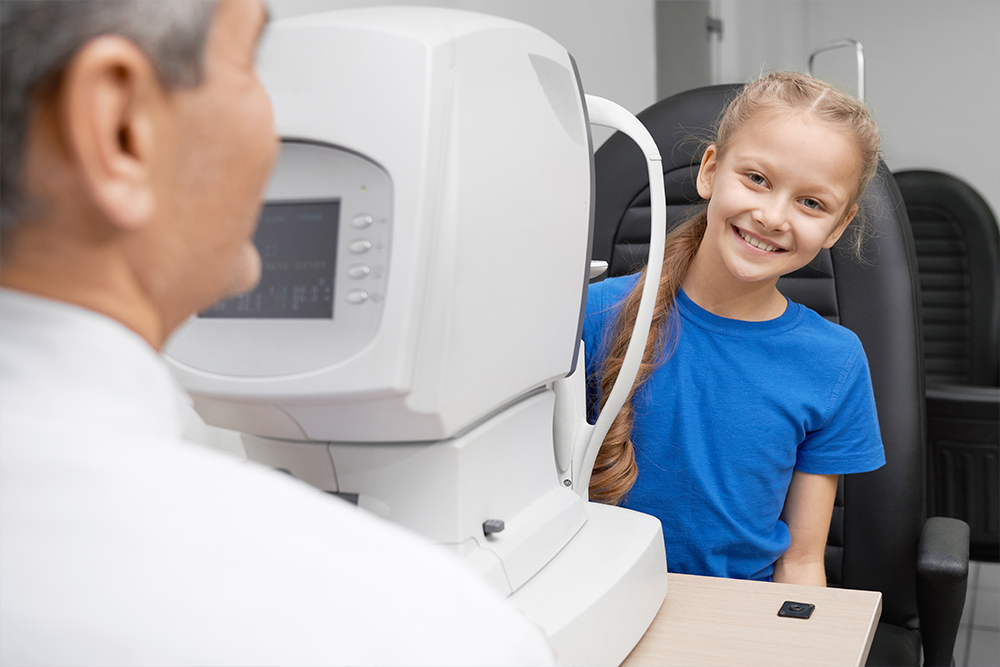
Monitoring Your Child's Eye Growth
Regular follow-up appointments allow us to evaluate prescription changes, monitor eye growth, and adjust treatment as your child develops.
Using advanced diagnostic technology, we carefully track progression to ensure your child receives the most effective care throughout their growing years.
Protecting Vision for the Future
As myopia progresses, the eye becomes longer, increasing stress on delicate retinal tissues.
This can increase the likelihood of future complications, including myopic macular degeneration—a condition affecting the central retina that can reduce detailed vision later in life.
The goal of myopia control is not simply to reduce dependence on glasses today, but to help lower the lifetime risk of vision-threatening eye disease.
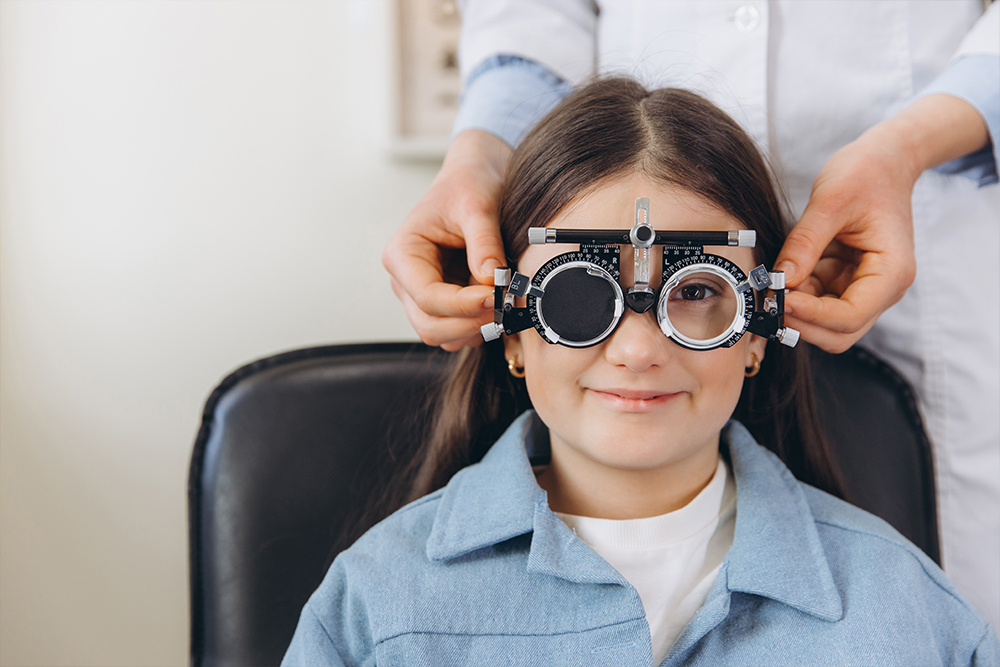
Schedule a Myopia Assessment
Frequently Asked Questions
Can eye diseases develop without symptoms?
What is an OCT scan?
Can diabetes affect my eyesight?
Is glaucoma curable?
Do I need to see an ophthalmologist?
Does a family history increase my risk of eye disease?
Patient Reviews
What Our Patients Say
EXCELLENT Based on 88 reviews
 Posted on Google
 balraj maviGreat selection of frames especially Lindberg glasses. Excellent customer service and treatment. Highly recommendedPosted on Google
 Carolyn ArthurI had a great experience with Dr. Gill! He was incredibly friendly, efficient, and took the time to clearly explain everything during my appointment. I felt well cared for and informed every step of the way. The staff were absolutely outstanding, truly 5+ stars for their professionalism, warmth, and organization. The whole visit was smooth from start to finish. Highly recommend Dr. Gill and the entire team!Posted on Google
 Micheal BrattIm in Oakville for work and one of the screws holding an arm on my glasses came out and vanished at work. A phone call and super quick vist later and I was on my way able to see again ^^ Thank you Lorie for your understanding and help!!Posted on Google
 Hale WashDr. Mandip Gill was an excellent doctor l, he was extremely helpful. I don’t think there is anywhere else I would go to get my eyes checked than this clinic. The staff was great and very helpful. Overall a 10/10 experience.Posted on Google
 M PaskStopped in as I broke a pair of sunglasses right before a trip. They were so kind and helped me fix them! Thanks for your help :)Posted on Google
 Haven SDr. Simran Gill was incredibly thorough and took her time to properly assess my needs for glasses, which I really appreciated. She explained everything in clear, easy-to-understand terms. She also provided very specific, practical next steps for managing my dry eyes. The clinic staff and eyeglasses sales team are also amazing. Highly recommend!Posted on Google
 Meetu SanghaAmazing staff and Dr Mandip Gill is an awesome gem. Jackie was super patient and nice with me. She was courteous and wonderful and kind .Posted on Google
 Marysia GonzalezI went in for a minor repair on my glasses and was assisted professionally and at no charge! Thank you so much. I will be back!Posted on Google
 Anupam RawlaDr. Gill was very kind and super prompt as I had an eye emergency (looked to be a risk) on the weekend and he took time to come in on a Sunday to examine things and give me a full diagnosis / analysis. This is amazing service! Thank you, truly appreciate this level of service!