
Children’s Eye Exams in Oakville
Comprehensive Pediatric Eye Care for Growing Eyes
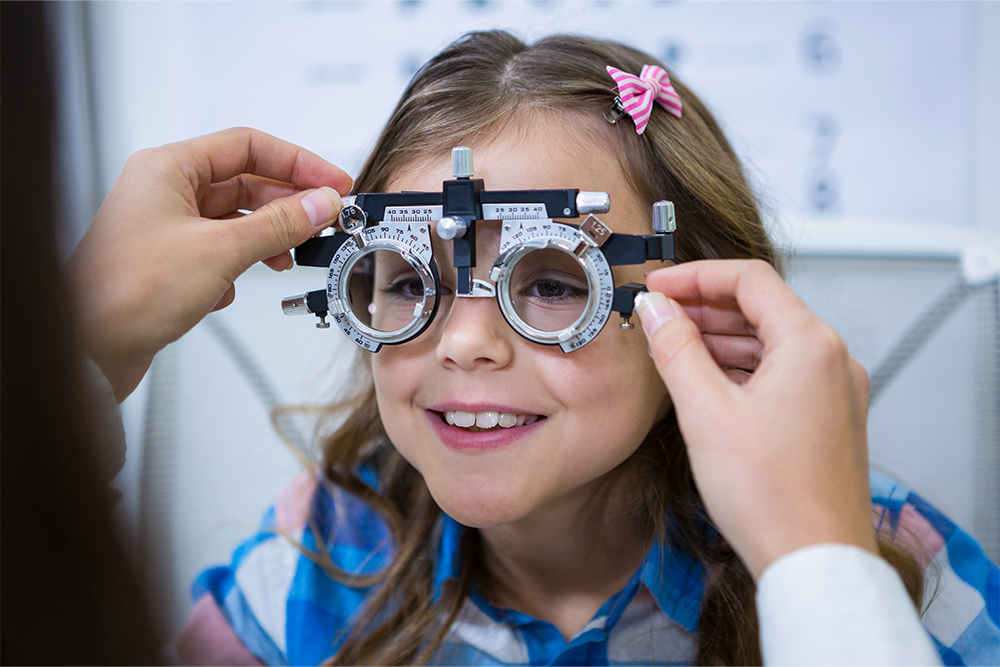
Why Are Children's Eye Exams Important?
Many parents assume their child will complain if they cannot see clearly. In reality, children often believe everyone sees the way they do.
According to the Canadian Association of Optometrists, approximately 80% of a child’s learning is visual, making healthy vision an essential part of academic success. Yet many common childhood vision problems develop without obvious symptoms.
Undetected vision issues can affect:
- Reading and learning performance
- Concentration and attention
- Hand-eye coordination
- Athletic performance
- Confidence and social development
Comprehensive eye exams for kids allow vision problems to be identified and treated before they begin to impact learning, behaviour, or development.
What Happens During a Children's Eye Exam?
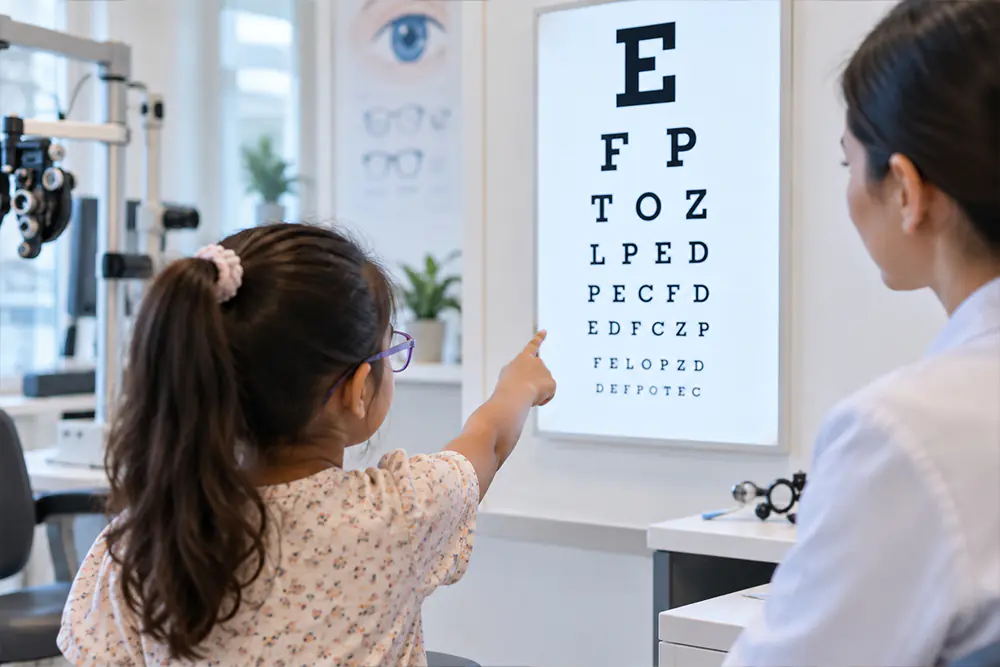
- Visual Acuity Assessment – Age-appropriate testing to evaluate how clearly your child sees at various distances.
- Eye Teaming and Alignment – Assessment for conditions such as strabismus (eye turn) and amblyopia (lazy eye), which are most effectively treated when detected early.
- Refraction Testing – Measurement of any prescription needed to improve vision and visual comfort.
- Focusing and Binocular Vision – Evaluation of how the eyes work together and maintain focus during reading and near tasks.
- Colour Vision and Depth Perception – Testing important visual skills that contribute to learning, sports, and everyday activities.
- Comprehensive Eye Health Examination – Using advanced retinal imaging and Optical Coherence Tomography (OCT), we evaluate the health of the retina, optic nerve, and other internal eye structures to provide a thorough assessment of your child’s ocular health.
Myopia Control for Children
Nearsightedness (myopia) is becoming increasingly common among children worldwide. Research suggests that approximately one in two people globally may be myopic by 2050, increasing the risk of retinal disease, glaucoma, and other eye health complications later in life.
When Should Children Have Eye Exams?
First Eye Exam: Between 6 and 12 months of age
Second Eye Exam: Around age 3
Third Eye Exam: Before starting school, around age 5
Ongoing Care: Annually thereafter, or as recommended by your optometrist
Regular pediatric eye exams help ensure visual development remains on track throughout childhood and adolescence.
Children's Eye Exams and OHIP Coverage
Children's Optometrist in Oakville
Schedule Your Child's Eye Exam Today
Frequently Asked Questions
How often should children have eye exams?
Can children have vision problems without symptoms?
How long does a children's eye exam take?
Does my child need glasses?
What is myopia control?
Are children's eye exams covered by OHIP?
Patient Reviews
What Our Patients Say
EXCELLENT Based on 88 reviews
 Posted on Google
 balraj maviGreat selection of frames especially Lindberg glasses. Excellent customer service and treatment. Highly recommendedPosted on Google
 Carolyn ArthurI had a great experience with Dr. Gill! He was incredibly friendly, efficient, and took the time to clearly explain everything during my appointment. I felt well cared for and informed every step of the way. The staff were absolutely outstanding, truly 5+ stars for their professionalism, warmth, and organization. The whole visit was smooth from start to finish. Highly recommend Dr. Gill and the entire team!Posted on Google
 Micheal BrattIm in Oakville for work and one of the screws holding an arm on my glasses came out and vanished at work. A phone call and super quick vist later and I was on my way able to see again ^^ Thank you Lorie for your understanding and help!!Posted on Google
 Hale WashDr. Mandip Gill was an excellent doctor l, he was extremely helpful. I don’t think there is anywhere else I would go to get my eyes checked than this clinic. The staff was great and very helpful. Overall a 10/10 experience.Posted on Google
 M PaskStopped in as I broke a pair of sunglasses right before a trip. They were so kind and helped me fix them! Thanks for your help :)Posted on Google
 Haven SDr. Simran Gill was incredibly thorough and took her time to properly assess my needs for glasses, which I really appreciated. She explained everything in clear, easy-to-understand terms. She also provided very specific, practical next steps for managing my dry eyes. The clinic staff and eyeglasses sales team are also amazing. Highly recommend!Posted on Google
 Meetu SanghaAmazing staff and Dr Mandip Gill is an awesome gem. Jackie was super patient and nice with me. She was courteous and wonderful and kind .Posted on Google
 Marysia GonzalezI went in for a minor repair on my glasses and was assisted professionally and at no charge! Thank you so much. I will be back!Posted on Google
 Anupam RawlaDr. Gill was very kind and super prompt as I had an eye emergency (looked to be a risk) on the weekend and he took time to come in on a Sunday to examine things and give me a full diagnosis / analysis. This is amazing service! Thank you, truly appreciate this level of service!